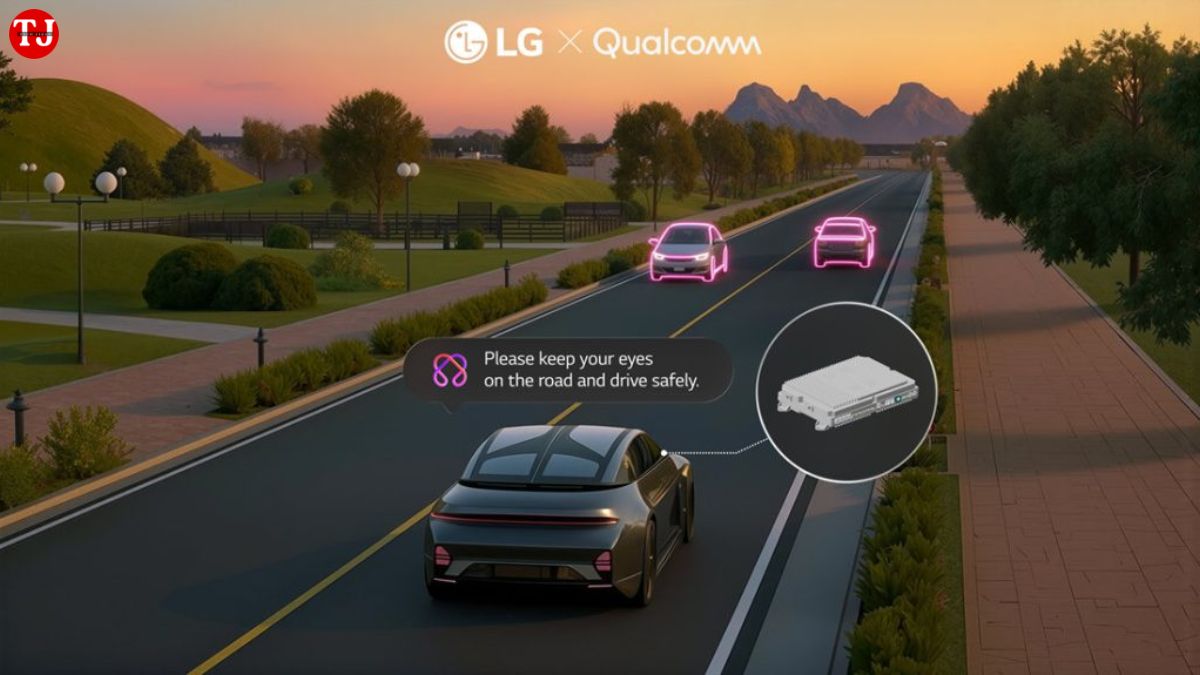
LG is preparing to make a major leap in automotive technology with the debut of its advanced Generative AI Cabin Platform at CES 2026, taking place from January 6–9 in Las Vegas. This next-generation in-car solution brings generative artificial intelligence directly into the vehicle’s infotainment ecosystem, powered by Qualcomm’s Snapdragon® Cockpit™ Elite, marking a significant milestone in the development of future-ready AI-defined vehicles (AIDVs).
The platform will be showcased privately during CES 2026 and will highlight how LG aims to transform modern mobility by integrating on-device AI for personalization, safety enhancement, and immersive infotainment experiences.
What Is LG’s Generative AI Cabin Platform?
LG’s new AI Cabin Platform is an advanced automotive AI engine designed to work inside the vehicle without relying on cloud connectivity. It integrates multiple generative AI capabilities such as:
- Vision Language Models (VLMs)
- Large Language Models (LLMs)
- Image generation systems
- Context-aware driving assistance tools
Unlike traditional car infotainment platforms, this solution uses on-device AI processing, meaning all computations occur locally within the vehicle’s high-performance computing (HPC) unit.
This ensures faster response times, enhanced privacy, secure processing of personal data, and uninterrupted performance even without an internet connection.
On-Device Generative AI: A Major Advantage for Future Vehicles
One of the most notable features of LG’s AI Cabin Platform is the full integration of on-device generative AI, powered by the extensive capabilities of the Snapdragon Cockpit Elite platform.
Why On-Device AI Matters
- Real-time, low-latency performance
All AI tasks—from driver monitoring to interface adaptation—are processed instantly without delays caused by cloud communication. - Higher data security and privacy
Since sensitive information never leaves the vehicle, risks related to data leaks or cyber threats are significantly lower. - Stable operation anytime, anywhere
The system works flawlessly even when the vehicle is in remote areas without network connectivity. - Energy-efficient processing
Qualcomm’s chip is designed to optimize power usage, ensuring the infotainment and safety systems run efficiently.
This approach places LG among the frontrunners building next-generation AI-defined vehicles, a concept that represents the evolution beyond traditional software-defined vehicles (SDVs).

Advanced Context-Aware Features for Personalized and Safer Driving
A key highlight of the Generative AI Cabin Platform is its ability to understand and analyze real-time driving conditions using data from both interior and exterior cameras.
This enables the system to provide highly personalized and safety-focused interactions.
1. Intelligent Safety Alerts
The platform constantly monitors the surroundings and the driver’s attention levels.
For example, if a vehicle is merging ahead and the system detects that the driver hasn’t noticed it, it will issue a specific spoken warning such as:
“A car is merging ahead. Please keep your eyes on the road.”
Such targeted alerts enhance situational awareness and assist in preventing accidents, especially in high-traffic or complex driving conditions.
2. Adaptive Infotainment and Personalized UI
The system doesn’t just focus on safety—it also enhances the in-car experience.
It dynamically adjusts the infotainment display and user interface based on environmental conditions and driver preferences.
For example:
- During snowy weather, the platform can automatically generate a winter-themed background for the music dashboard.
- It may also recommend personalized playlists suited to the environment or driver mood.
- If the driver looks fatigued, it can suggest relaxing audio or dim the display brightness for comfort.
This use of context-aware AI creates a more enjoyable and deeply personalized driving environment.
Strengthening Partnership With Qualcomm for Future Mobility
LG’s announcement also highlights their ongoing strategic collaboration with Qualcomm Technologies, a leader in automotive chips and intelligent mobility solutions.
At CES 2025, both companies revealed a high-performance computing system built on the Snapdragon Ride™ Flex SoC, which merged:
- In-Vehicle Infotainment (IVI)
- Advanced Driver Assistance Systems (ADAS)
into a unified control unit.
The new AI Cabin Platform is the next step forward, leveraging Qualcomm’s most powerful automotive hardware to support advanced generative AI capabilities, seamless multimedia experiences, and futuristic mobility features.
This partnership is expected to bring more breakthroughs in smart mobility, autonomous driving, and next-generation AI-powered vehicle systems.
LG’s Vision for AI-Defined Vehicles
Eun Seok-hyun, President of the LG Vehicle Solution Company, emphasized the company’s mission of shaping the future of mobility by blending AI innovation with automotive excellence. He stated:
LG aims to build a future where vehicles do more than transport—they understand passengers and respond proactively to their needs, creating a uniquely personal journey every time.
With the new Generative AI Cabin Platform, LG positions itself at the forefront of the transition from Software-Defined Vehicles (SDVs) to AI-Defined Vehicles (AIDVs), ushering in a new era of intelligent, intuitive, and immersive mobility.
Conclusion: What to Expect at CES 2026
LG’s Generative AI Cabin Platform is set to be one of the most exciting automotive innovations at CES 2026. With on-device generative AI, personalized infotainment, real-time safety enhancements, and a strong partnership with Qualcomm, LG is creating a new standard for future vehicles.
As the automotive world shifts toward AI-driven mobility, LG’s new platform could redefine how drivers interact with vehicles—making driving safer, smarter, and more personalized than ever before.