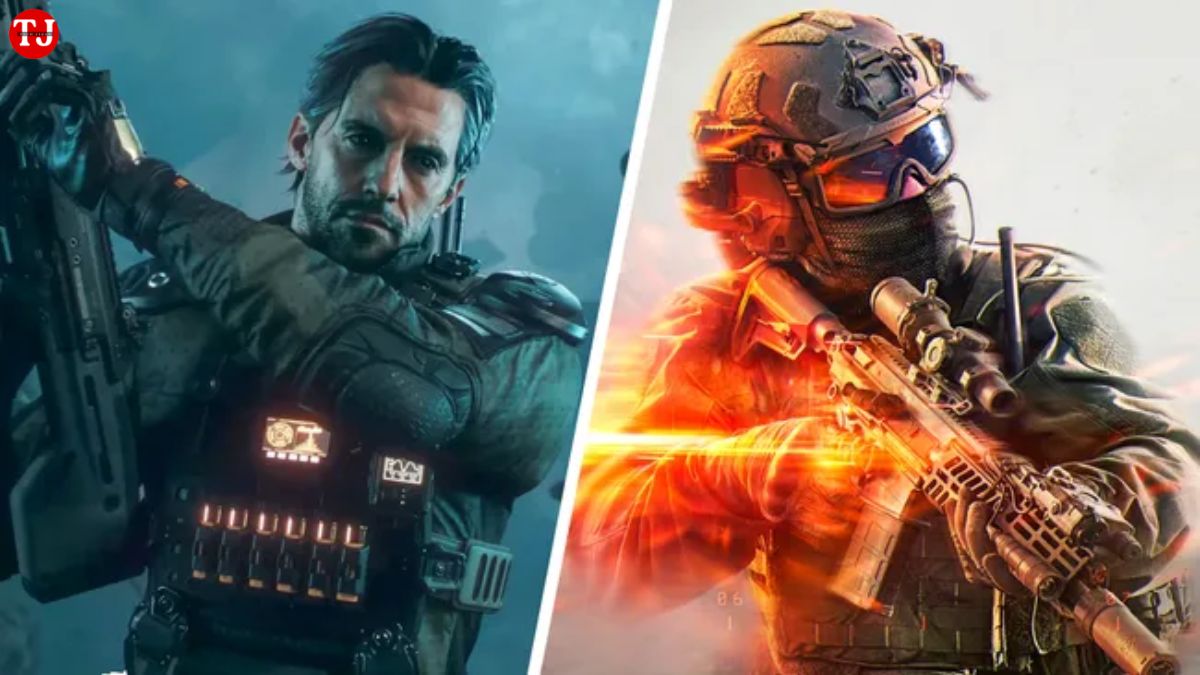
The long-running rivalry between Call of Duty and Battlefield has once again come into focus, with new US player data revealing a widening gap between the two franchises. While Battlefield 6 launched with strong momentum and solid early engagement across platforms, it has struggled to maintain its position against the overwhelming ecosystem strength of Call of Duty HQ.
According to the latest industry data, Call of Duty remains one of the most-played game franchises in the United States, while Battlefield 6 has slipped further down the rankings. However, a deeper look at the numbers suggests the situation is more nuanced than it appears at first glance.
Call of Duty HQ’s Ecosystem Keeps It on Top
One of the biggest reasons behind Call of Duty’s dominance is the structure of Call of Duty HQ, which combines multiple titles into a single engagement hub. This includes:
- Call of Duty: Black Ops 6
- Call of Duty: Warzone
- Call of Duty: Black Ops 7 (newly released)
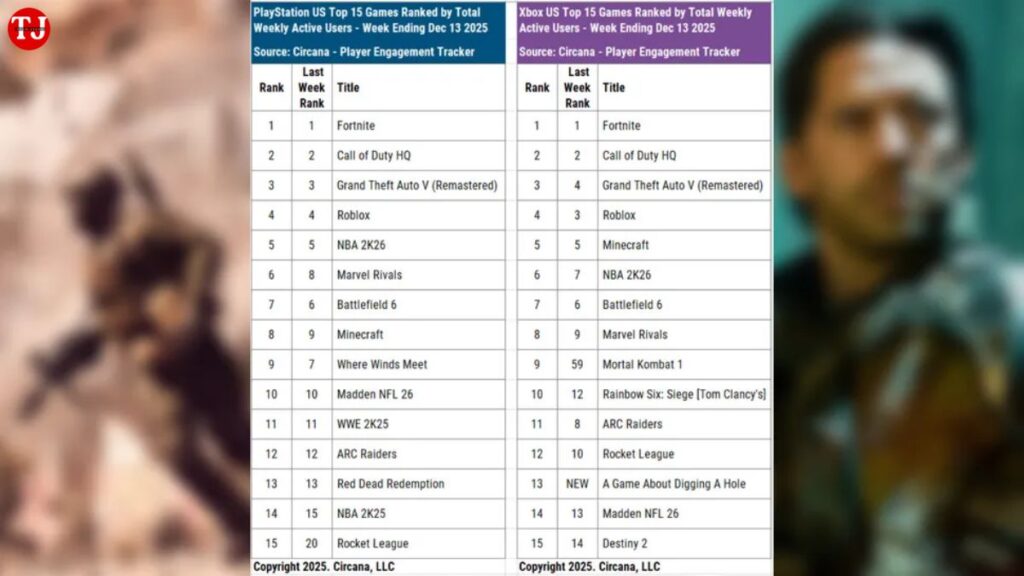
Thanks to this unified ecosystem, Call of Duty HQ currently ranks as the second most-played title in the US across both Xbox and PlayStation, according to Circana data. However, this aggregated approach makes direct comparisons difficult. Unlike Battlefield 6, which is tracked as a single product, Call of Duty HQ benefits from shared progression, cosmetics, and cross-title engagement.
As a result, the franchise’s overall strength may be masking weaker performance from individual releases—particularly Black Ops 7.
Black Ops 7 Sales Raise Questions
Despite Call of Duty’s strong presence in the most-played charts, early reports suggest that Call of Duty: Black Ops 7 has underperformed relative to expectations. European launch data indicates:
- Opening week sales were 63% lower than Battlefield 6
- Sales dropped over 50% compared to Black Ops 6
These figures suggest that while players remain invested in the Call of Duty ecosystem as a whole—largely due to Warzone—the latest premium release has not generated the same excitement as previous entries.
This discrepancy highlights an important trend: brand strength and live-service integration can sustain engagement even when individual games struggle to meet expectations.
Battlefield 6 Slips in US Player Rankings
On the other side of the rivalry, Battlefield 6 has experienced a gradual decline in US player rankings. Data from Circana shows that for the week ending December 13, 2025, Battlefield 6 ranked seventh across Xbox and PlayStation, down from sixth place the previous week.
While this drop may appear minor, it signals difficulty in retaining momentum during a critical post-launch window. Battlefield 6 includes:
- A paid core multiplayer experience
- REDSEC, its free-to-play battle royale mode
Even with a free-to-play offering designed to expand its audience, Battlefield 6 has not been able to challenge the dominance of Call of Duty HQ in the most-played charts.
That said, landing consistently within the top 10 most-played games in the US is still a strong achievement and reflects a healthy, engaged player base.
Is Battlefield 6’s Strategy Misaligned With Player Trends?
The broader live-service shooter market has become increasingly competitive. While battle royale modes once guaranteed massive engagement, player preferences appear to be shifting.
Newer genres—particularly extraction shooters like ARC Raiders—are gaining traction by offering higher tension, unique progression systems, and more distinctive gameplay loops. In comparison, Battlefield 6’s traditional battle royale approach may feel less innovative in a crowded market dominated by Fortnite and Warzone.
This raises a critical question for the Battlefield franchise: Is sticking closely to familiar formulas limiting its long-term growth?
Cosmetic Controversy Adds to Community Concerns
Beyond player numbers, Battlefield 6 has faced additional scrutiny from its community. Some fans have raised concerns about paid cosmetic items potentially using generative AI in their creation.
While no official confirmation has sparked widespread backlash, the discussion highlights growing sensitivity among players regarding transparency, artistic integrity, and monetization practices in modern live-service games.
For a franchise working to rebuild trust and maintain long-term engagement, even small controversies can have an outsized impact.
What Else Does Circana’s Data Reveal?
The broader US gaming charts paint a clear picture of how difficult it is for new titles to break through:
- Fortnite continues to dominate at number one across both PlayStation and Xbox
- Grand Theft Auto V (Remastered) remains firmly in third place on both platforms
- Roblox ranks fourth on PlayStation and climbs even higher on Xbox
The rest of the top 10 is largely made up of long-running live-service games, reinforcing the idea that sustained engagement—not just strong launches—is the key to success in today’s gaming industry.
Final Thoughts: A Rivalry Far From Over
While Call of Duty continues to dominate US player rankings, Battlefield 6’s performance is not a failure by any stretch. The game maintains a solid position among the most-played titles, but its decline highlights the challenges of competing against an entrenched live-service ecosystem like Call of Duty HQ.
At the same time, Black Ops 7’s weaker-than-expected sales suggest that Call of Duty is not immune to player fatigue. The franchise’s future success may depend on innovation just as much as scale.
As player tastes evolve and new genres gain momentum, both franchises face a pivotal moment. Whether Battlefield adapts with bolder ideas—or Call of Duty reinvents its annual release model—will determine how this iconic rivalry unfolds in the years ahead.