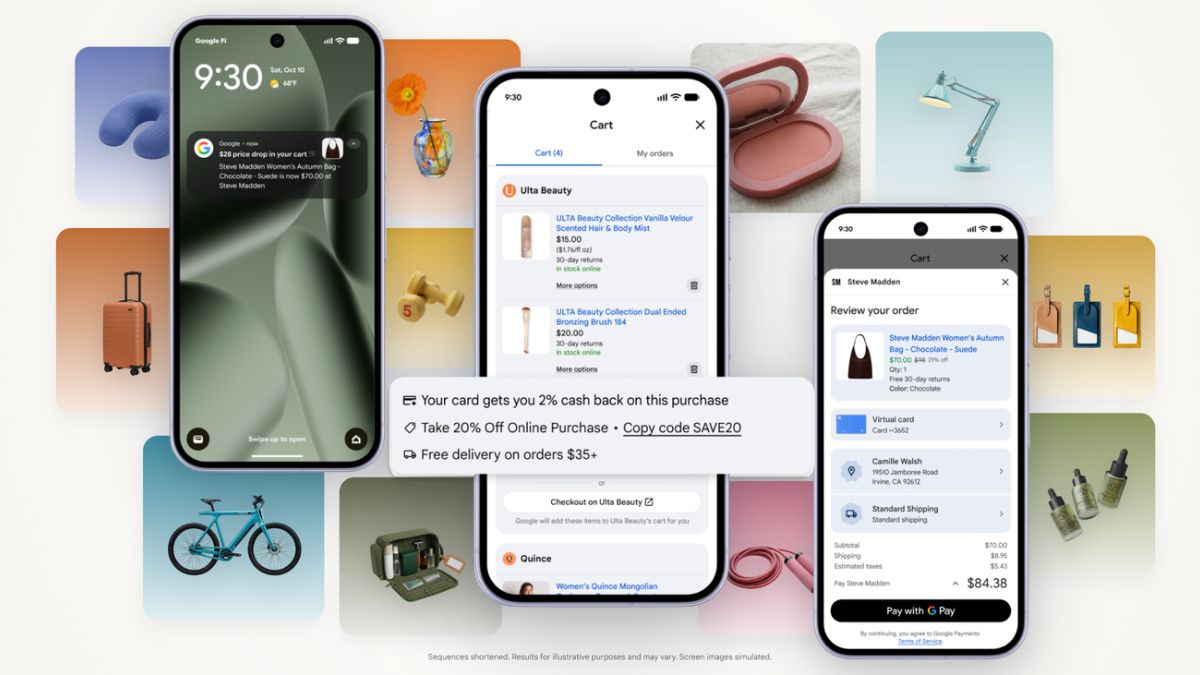
Google Universal Cart is rolling out to users in the United States, introducing a new way to save products, track prices, and manage potential purchases across Google Search and the Gemini app. The new AI-powered shopping feature aims to make online shopping more convenient by bringing products from different retailers into one central place ahead of the holiday shopping season.
What Is Google Universal Cart?
Google Universal Cart is an AI-powered shopping tool designed to simplify how people discover, save, and purchase products online. Instead of searching for the same item again whenever they return to a shopping session, users can keep track of products they are interested in through a centralized cart.
Google announced the feature at its Google I/O event in May, and the company has now started making it available to users in the United States.
The tool brings together products discovered through Google Search and the Gemini app, helping shoppers organize potential purchases without having to manage separate lists or repeatedly revisit product pages.
This approach could be particularly useful during major shopping events, when consumers compare prices across retailers before deciding which products to buy.
How Google Universal Cart Works
The main purpose of Universal Cart is to let shoppers save products while browsing and return to them later without losing track of their choices.
When users discover an interesting product through Google Search or Gemini, they can add it to their shopping collection. They can then revisit their saved items and continue evaluating their options instead of starting their search from scratch.
The feature is designed to bring products from multiple retailers together, making it easier to compare potential purchases and keep shopping decisions organized.
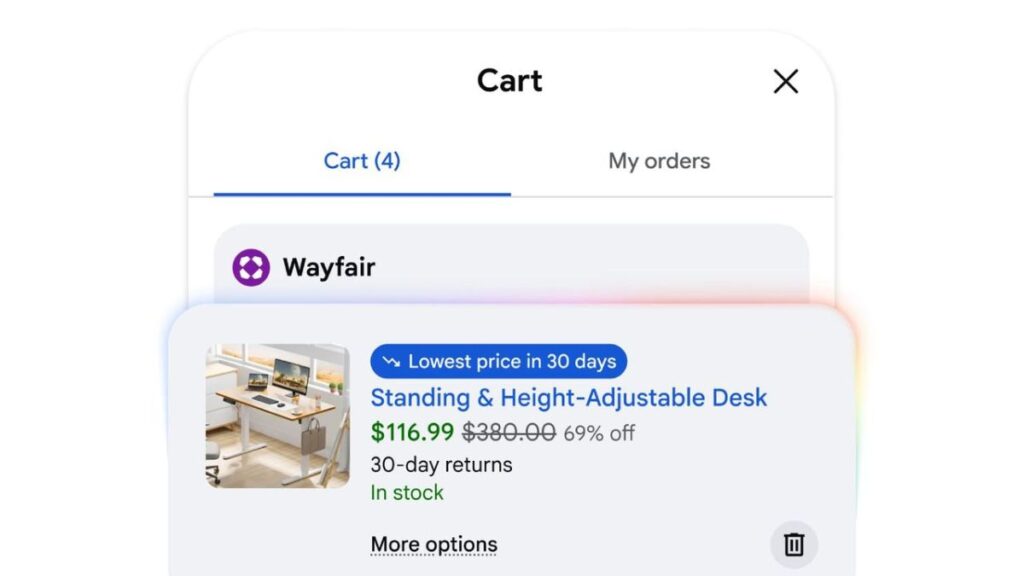
For example, someone looking for headphones, a new smartphone, and holiday gifts could save products they discover during different searches and return to those items later.
Universal Cart is therefore intended to make product discovery and purchase planning feel more connected, rather than treating every shopping session as a separate activity.
Google Universal Cart Can Track Prices and Product Availability
Price monitoring is another important part of Google’s new shopping experience.
Online prices can change frequently, and popular products sometimes sell out when demand increases. Universal Cart is designed to help shoppers monitor these changes by sending notifications when a saved product’s price drops or when an unavailable item comes back into stock.
These alerts could help consumers decide when to complete a purchase instead of repeatedly checking product pages manually.
The feature may also prove useful during the holiday shopping season, when retailers introduce discounts and limited-time promotions.
However, receiving a price-drop notification does not necessarily mean a product has reached its lowest possible price. Shoppers should still compare offers, shipping charges, return policies, and retailer conditions before completing an order.
AI-Powered Shopping With Personalized Offers
Google is also incorporating personalized assistance into its shopping tools.
According to the company, Universal Cart can take credit card benefits into account when helping shoppers consider payment options. It can also surface relevant promotional codes that may help users find better offers.
These capabilities are intended to make shopping decisions more informed by bringing useful purchasing information into the shopping process.
For example, a shopper comparing two products may benefit from seeing an applicable promotional code or considering card-related rewards before checking out.
The availability and relevance of these benefits may vary depending on the product, retailer, payment method, and applicable offer terms.
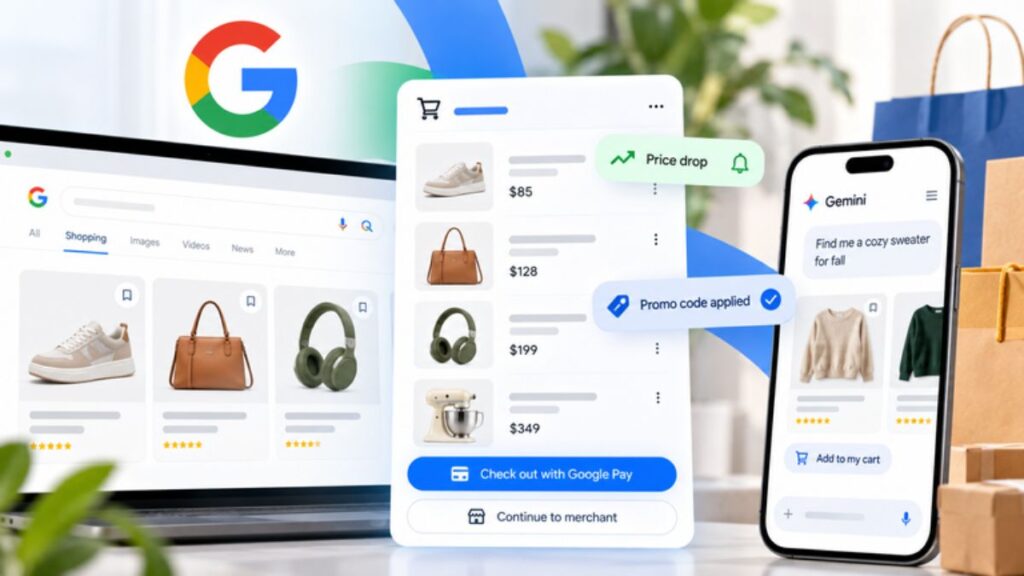
Google Universal Cart and Universal Commerce Protocol Explained
Google’s Universal Commerce Protocol, commonly known as UCP, is an important part of its broader AI commerce strategy.
Introduced earlier this year, UCP is an open standard designed to help AI agents and retailers communicate across different stages of the shopping journey, including checkout.
As AI assistants become more capable of researching products and helping users make purchasing decisions, a standardized way for these systems to work with retailers could make the overall process smoother.
Universal Cart fits into this wider effort by helping users organize their shopping interests while Google continues developing tools that connect product discovery with purchasing.
The protocol is designed to support interactions between participating commerce systems. It should not be interpreted as a guarantee that every retailer or product will support the same checkout experience.
Google Expands Its AI Shopping Features
Universal Cart is part of Google’s broader effort to bring artificial intelligence into online shopping.
The company has already introduced conversational product discovery through AI Mode in Google Search. This experience allows users to explore products and refine their searches using more natural, conversational queries.
Google has also developed its “Let Google Call” feature, which uses AI to contact nearby stores and check product availability on behalf of shoppers.
Together, these tools reflect Google’s push to make shopping more interactive and less dependent on traditional keyword searches and manual product comparisons.
Universal Cart adds another element to that strategy by focusing on what happens after a shopper discovers something interesting: saving the product, tracking it, and returning when the time is right to buy.
Google Faces Growing Competition in AI-Powered Shopping
Google is not the only technology company exploring AI-driven commerce.
Amazon, OpenAI, and other companies are developing shopping experiences that use AI to help consumers discover products, compare options, and complete purchasing tasks.
The broader goal is to turn AI assistants into practical shopping companions rather than tools used only to answer questions or generate information.
For Google, the advantage of connecting shopping features with Search and Gemini is that users can move between product research and shopping management within its existing ecosystem.
However, the success of these experiences will depend on factors such as product selection, pricing accuracy, retailer participation, the usefulness of notifications, and how easily shoppers can complete their purchases.
When Will Google Universal Cart Be Available?
Google has announced the rollout of Universal Cart for users in the United States, with Google Search and the Gemini app serving as the initial access points.
The company first previewed the feature at Google I/O in May before announcing its US availability.
The announcement does not establish a confirmed worldwide launch date. Users in other countries may need to wait for further availability announcements from Google.
Final Thoughts
Google Universal Cart could make online shopping easier by combining saved products, price alerts, restock notifications, and personalized shopping assistance in one experience.
Its integration with Google Search and Gemini gives the company another way to connect AI-powered product discovery with purchase planning. Meanwhile, Universal Commerce Protocol supports Google’s wider ambition to make interactions between AI agents and retailers more seamless.
For shoppers, the biggest potential benefit is convenience: finding products, keeping track of deals, and returning to purchase decisions without having to repeat the entire search process.
As Google expands its AI shopping ecosystem, Universal Cart will be worth watching, particularly as retailers compete for consumers’ attention during major shopping seasons.
