Apple Pay India launch marks a new development in the country’s digital payments market, but the service is entering a landscape already dominated by Unified Payments Interface (UPI). Instead of competing directly with QR-code payments used by millions of Indians, Apple’s payment service is initially targeting a more specific audience: iPhone users who prefer credit cards for high-value purchases.
The service launched in India on September 30, initially supporting eligible Axis Bank Visa and Mastercard credit cards. With no support for debit cards, RuPay or UPI at launch, Apple Pay’s initial reach remains limited. However, its integration with Indian merchants, payment gateways and contactless payment infrastructure could help it establish a position in the country’s premium payments segment.
The key question is whether Apple can convince India’s largest credit card issuers to join the platform and make mobile payments more convenient for iPhone owners.
Apple Pay Enters India’s Credit Card Market, Not the UPI Race
Apple Pay made its debut in the United States in October 2014, taking approximately 12 years to reach India. While that may seem like a late entry, the company’s initial strategy suggests that it is not trying to replace India’s most widely used digital payment method.
UPI has established itself as the preferred payment option for everyday transactions, from buying groceries to paying for tea at local shops. Its simple QR-code system allows customers to transfer money directly between bank accounts, making it convenient for transactions of almost any size.
According to the figures cited in the original report, UPI processed 24.51 billion transactions worth approximately ₹29.82 trillion in August. Credit card spending during the same month stood at around ₹2.02 trillion, highlighting the considerable difference in scale between the two payment methods.
Rather than competing for every small transaction, Apple Pay is focusing on customers who already use credit cards for shopping, dining, travel and other premium purchases.
This strategy aligns with Apple’s existing customer base in India. iPhone owners who regularly use credit cards for larger payments could find value in a service that makes checkout faster while keeping their existing card-based payment arrangements.
India’s Growing Credit Card Market Could Help Apple Pay
Although UPI dominates transaction volumes, India’s credit card market continues to attract banks and payment companies. The market offers opportunities to increase spending among customers who already have access to formal banking services and established credit facilities.
The figures cited in the original report show that India had approximately 124.05 million credit cards outstanding in August, compared with 112.34 million a year earlier. Credit card transactions also increased year over year, indicating continued expansion in the sector.
For Apple, this customer segment is particularly relevant because its smartphone users are already a natural audience for premium digital services.
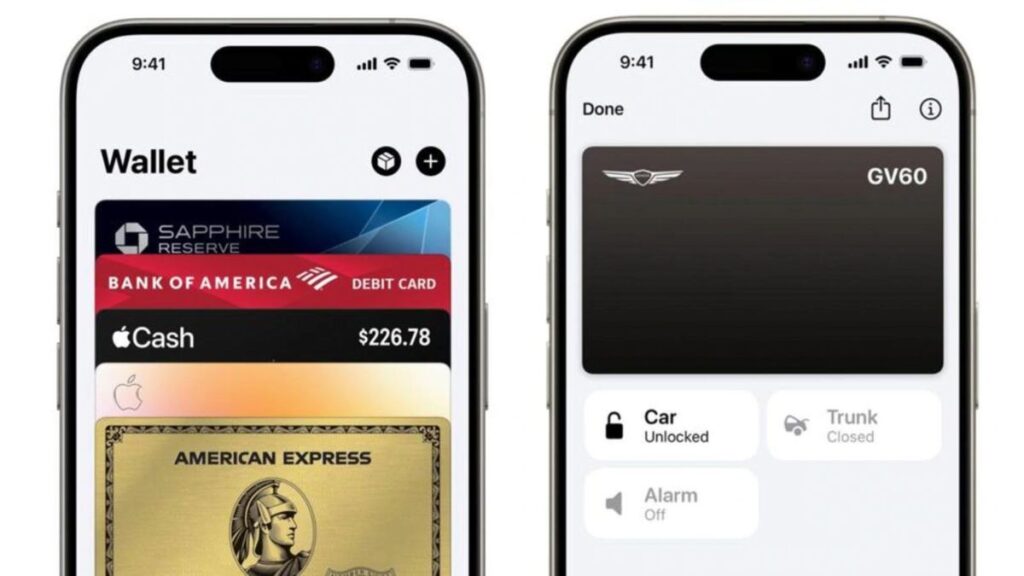
Counterpoint Research figures cited in the original reporting also point to Apple’s growing position in India’s smartphone market. Apple reportedly increased its share by value from 23% in 2024 to 28% in 2025, strengthening its position in the country’s premium smartphone segment.
Apple Pay could build on that growth by giving existing iPhone customers another reason to use Apple’s ecosystem for everyday activities.
India is also becoming increasingly important to Apple’s broader business strategy. The country has expanded its role in iPhone manufacturing, while Apple has continued developing its retail presence. A successful payment service could complement these investments by strengthening customer engagement and potentially generating additional services revenue.
However, the size of Apple’s potential audience should not be confused with the number of people who can use Apple Pay today. Its initial bank and card restrictions significantly limit adoption.
Why Did Apple Start With Axis Bank?
Axis Bank is Apple’s initial issuing-bank partner in India, providing access to eligible Visa and Mastercard credit cards.
According to the figures cited in the original report, Axis Bank had approximately 16.29 million credit cards outstanding and recorded around ₹22,704 crore in credit card spending during August.
While Axis is a major player, several larger issuers remain outside the initial launch.
HDFC Bank, SBI Card and ICICI Bank have substantial credit card portfolios and are important to the future expansion of Apple Pay in India. Their participation could increase the service’s potential customer base considerably.
For Axis Bank, supporting Apple Pay offers an opportunity to differentiate its credit card products among iPhone users. Early participation may also help the bank attract customers who value contactless payments and convenient digital checkout experiences.
For Apple, Axis provides a starting point from which it can evaluate customer adoption, merchant acceptance and the effect of mobile payments on card spending.
The challenge will be expanding beyond a single issuing bank. Until additional major banks join, Apple Pay will remain a relatively specialised payment option rather than a service available to a broad cross-section of Indian consumers.
Apple’s 20-Basis-Point Fee Demand Could Delay Wider Adoption
One of the biggest challenges facing Apple Pay in India is the commercial agreement between Apple and card-issuing banks.
According to sources cited by TechCrunch in the original report, Apple is seeking a fee of approximately 20 basis points per transaction from issuing banks. One basis point represents 0.01 percentage points, meaning the proposed fee would equal 0.20% of the transaction value.
That could be significant in a market where banks already manage card rewards, fraud prevention, customer acquisition and other operating costs.
Indian banks operate in a competitive credit card environment, and the largest issuers have considerable bargaining power. They may be reluctant to give up part of their existing margins without evidence that Apple Pay will generate additional spending or attract valuable customers.

Apple, meanwhile, needs enough participating banks to make its service useful to a meaningful number of iPhone owners.
The arrangement with Axis Bank gives Apple an opportunity to demonstrate whether its service can encourage more card transactions, improve checkout conversion and increase customer engagement.
For example, if all of Axis Bank’s reported August credit card spending of ₹22,704 crore had passed through Apple Pay at a fee of 0.20%, the theoretical monthly fee would have been approximately ₹45.4 crore.
This is a hypothetical upper-bound calculation, not a forecast of Apple’s actual revenue. In practice, only a portion of eligible transactions would use Apple Pay, and the service’s real earnings would depend on adoption and the final commercial terms.
The next phase of negotiations with major issuers will therefore be crucial. Banks are more likely to reconsider the fee if Apple can demonstrate measurable benefits rather than simply offer another digital wallet.
Can UPI’s New Merchant Fee Give Apple Pay an Opportunity?
India’s payment ecosystem is also evolving as policymakers and payment providers reconsider the economics of digital transactions.
The original report describes a change introducing a 0.4% merchant discount rate for certain UPI merchant payments above ₹2,000, with exemptions and transaction-specific conditions. It also notes that the government said the change would leave the vast majority of person-to-merchant transactions unaffected.
This development does not mean that all UPI payments have become chargeable. The applicable rules depend on the transaction type, merchant eligibility and relevant exemptions. The latest official rules should be checked before treating any particular rate or effective date as current.
The distinction matters because merchants have historically benefited from the low-cost nature of UPI payments. Credit card acceptance, by comparison, can involve merchant fees that vary by bank, card type, provider and commercial agreement.
For a merchant processing a high-value payment, these costs can influence which payment methods it encourages customers to use.
However, Apple Pay is not automatically a cheaper alternative for merchants. It generally relies on existing card-payment infrastructure, meaning the underlying card acceptance costs and commercial arrangements still matter.
Its stronger selling point is convenience. Customers can authenticate supported transactions using Apple’s device security features rather than manually entering card details or completing certain additional verification steps.
If that experience encourages more customers to complete purchases, merchants could benefit from improved checkout convenience. Whether those benefits outweigh the associated costs will depend on individual businesses and their payment arrangements.
Apple Pay vs UPI: What Is the Difference?
Although both services allow customers to make digital payments using a phone, they operate through different payment systems.
| Feature | Apple Pay in India | UPI |
|---|---|---|
| Primary payment method | Eligible supported credit cards | Linked bank accounts and supported credit-linked products |
| Initial bank support | Axis Bank | Participating banks across the UPI network |
| Contactless payments | Supported through compatible payment infrastructure | UPI Tap & Pay works with compatible devices and payment points |
| QR-code payments | Not a direct UPI replacement | Widely used for merchant payments |
| RuPay support | Not available at initial launch | Supported through eligible UPI-linked RuPay credit card products |
| Main advantage | Convenient, secure card-based checkout | Broad availability and convenient bank-to-bank payments |
The key difference is that Apple Pay is initially a card-based payment service, while UPI provides an interoperable payment network used by a wide range of banking apps.
For smaller everyday purchases, UPI’s established acceptance gives it a considerable advantage. For customers who prefer credit cards and their associated rewards, Apple Pay offers a different proposition.
The two services can therefore coexist, serving different payment preferences rather than necessarily replacing one another.
Apple Pay Faces Competition From Google and Samsung
Apple is entering a mobile payment market where contactless technology is already available on competing devices.
Google and Samsung offer payment capabilities on supported Android devices, while UPI apps have established a strong presence in both online and offline transactions.
India’s National Payments Corporation of India has also introduced UPI Tap & Pay, allowing users to make payments by tapping compatible NFC-enabled devices against supported tags or terminals.
This creates an important distinction between the physical act of tapping a phone and the payment system processing the transaction.
With Apple Pay, the payment is routed through an eligible credit card and its associated card network. With UPI, a transaction generally follows the UPI payment system and the relevant linked account or supported credit product.
Apple’s potential advantage lies in its integrated hardware and software experience. Face ID or other supported authentication methods can make payment authorisation convenient, while tokenisation helps protect the underlying card details during supported transactions.
However, this convenience only matters when customers have a supported card and can use Apple Pay at a compatible terminal, app or website.
The service must also persuade consumers to change their payment habits. In a country where QR-code payments are already familiar, encouraging more people to tap their phones at physical stores may take time.
Merchant Support Will Determine How Quickly Apple Pay Grows
Payment acceptance is another important factor in Apple’s India strategy.
The initial launch includes businesses such as Blinkit, Zomato and Reliance, alongside payment technology providers including Cashfree, Juspay, PayU, Pine Labs and Razorpay.
These integrations can help make Apple Pay available across participating merchant networks and online checkout systems.
Payment processors are important because they connect merchants with banks and card networks. When these providers support a new payment option, eligible businesses can potentially offer it without independently developing an entirely new payment infrastructure.
Nevertheless, integration does not guarantee universal acceptance. Availability depends on the merchant, the checkout platform, the payment terminal and the customer’s supported card.
Apple Pay’s growth will therefore depend on more than the number of businesses announcing support. Customers must encounter the service frequently enough to make it part of their normal payment routine.
Three Factors That Could Decide Apple Pay’s Future in India
1. Partnerships With More Banks
The addition of HDFC Bank, SBI Card or ICICI Bank would be a major development for Apple Pay.
These issuers have large credit card portfolios, and their participation could make the service accessible to substantially more eligible iPhone users.
Bank partnerships will also indicate whether Apple has found commercial terms that issuers consider worthwhile.
2. Support for More Cards and Payment Options
The absence of debit cards and RuPay support restricts the number of customers who can use Apple Pay.
Adding support for more card types could expand its reach, although such expansion would require the necessary agreements, technical integration and regulatory compliance.
RuPay credit card support would be particularly significant because it could bring Apple Pay into closer competition with credit-linked UPI payments.
However, no expansion should be assumed until Apple and the relevant financial institutions officially announce it.
3. Evidence of Higher Credit Card Spending
The third factor is measurable customer behaviour.
Monthly Reserve Bank of India data on credit card spending can help analysts understand whether participating banks are gaining spending momentum. A sustained improvement in Axis Bank’s spending per card relative to comparable issuers could provide useful evidence, although it would not independently prove that Apple Pay caused the increase.
Banks will want to know whether the service generates incremental transactions, improves customer retention or simply shifts existing card payments from one interface to another.
Clear evidence of additional value could make the business case for wider adoption more persuasive.
What Apple Pay’s India Launch Means for Consumers
For Indian iPhone owners with eligible Axis Bank Visa or Mastercard credit cards, Apple Pay offers another way to make supported payments without repeatedly entering card information.
Its usefulness will depend on where the customer shops, whether the merchant supports the service and whether the transaction meets the relevant card and device requirements.
Customers who primarily use UPI for small purchases may have little reason to change their habits. Those who regularly use credit cards for online shopping, restaurant bills or larger purchases may find the service more appealing.
For merchants, Apple Pay could provide an additional checkout option for eligible customers. For banks, it offers a potential way to strengthen their relationship with premium smartphone users, provided the commercial terms and customer adoption justify the investment.
The launch is therefore best understood as an attempt to expand card-based mobile payments rather than challenge UPI across the entire Indian payments market.
Final Verdict: Apple Pay Is Late to India, but Its Credit Card Opportunity Is Real
Apple Pay has entered India after years of growth in international markets, but its initial strategy is focused on a customer segment that already exists: iPhone users who prefer paying with credit cards.
UPI’s scale, familiar QR-code payments and extensive banking participation make it difficult for any competing service to displace it in everyday transactions. Apple does not need to win that entire market to establish a viable position.
Instead, its future will depend on whether it can persuade more Indian banks to participate, expand the range of supported cards and demonstrate that its payment experience creates enough value to justify the associated fees.
Axis Bank provides a starting point, while potential partnerships with HDFC Bank, SBI Card and ICICI Bank could determine how widely the service spreads.
For now, Apple Pay is not a replacement for UPI. It is an additional payment option aimed at India’s growing premium credit card segment. Whether it becomes a mainstream feature for Indian iPhone users will depend on bank partnerships, merchant acceptance and actual customer usage over the coming months.
