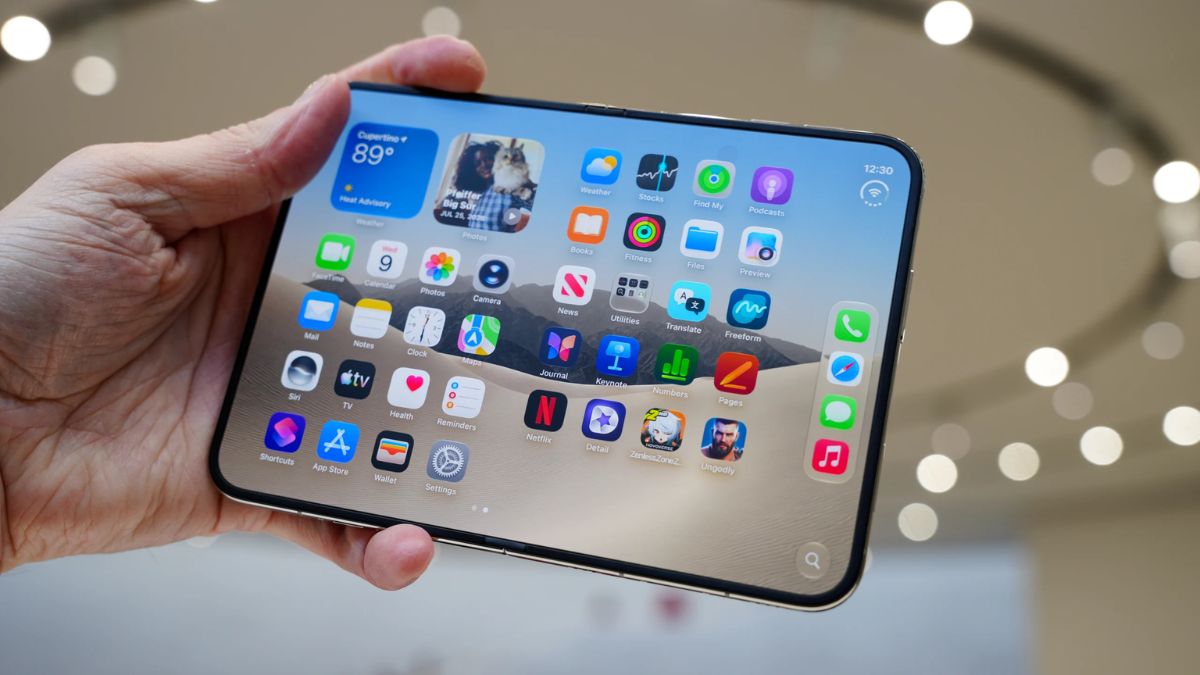
Apple’s first foldable iPhone is generating plenty of excitement, but Nothing CEO Carl Pei believes its premium price comes with some significant compromises. From the missing Face ID system to camera limitations, here is why the iPhone Duo may not be worth $1,999.
Carl Pei Questions the Value of Apple’s $1,999 Foldable iPhone
Apple’s entry into the foldable smartphone market is expected to attract considerable attention, particularly among users who want the flexibility of a larger display without carrying a separate tablet. However, the reported $1,999 price of the iPhone Duo has raised questions about whether its features justify the investment.
Nothing CEO Carl Pei is among those questioning Apple’s approach. According to the supplied report, Pei believes the device makes too many compromises for a smartphone positioned at the top end of the market.
His criticism focuses on three main areas: the absence of Face ID, limitations in the camera system, and missing professional photography controls. These concerns are particularly relevant because buyers spending nearly $2,000 may expect Apple’s most advanced hardware and software features in a single device.
While a foldable design introduces engineering challenges that traditional smartphones do not face, those challenges do not necessarily make the compromises acceptable to every buyer.
1. The Missing Face ID Feature Could Disappoint iPhone Users
Face ID has been an important part of Apple’s smartphone experience since its introduction with the iPhone X. It enables users to unlock their devices, authenticate purchases, and access supported applications using facial recognition.
The iPhone Duo reportedly does not include Face ID, a decision that Pei considers difficult to justify at this price point.
The device’s reported thickness of just 5.2mm when unfolded could be one reason for the omission. Apple’s Face ID system relies on TrueDepth hardware, which requires physical space inside a smartphone. Integrating this technology into an exceptionally thin foldable could therefore present a design challenge.
The dual-display arrangement may create additional complications. A foldable phone is designed to work in both its folded and unfolded states, meaning users need convenient authentication regardless of which screen they are using.
Installing facial recognition hardware for both displays could introduce further space and engineering constraints. However, Apple has not publicly confirmed that these considerations are the reasons behind the reported omission.
For users who have relied on Face ID for years, its absence could be a meaningful disadvantage. Others may find a fingerprint-based authentication system perfectly adequate, provided it is fast, secure, and conveniently positioned.
2. iPhone Duo Camera Limitations Raise More Questions About Its Price
Camera performance is another area where the iPhone Duo reportedly falls short of Apple’s Pro-series smartphones.
According to the supplied report, the foldable features a 12MP front-facing camera, compared with the reported 18MP selfie camera on the iPhone 18 Pro. Although megapixel counts alone do not determine image quality, the difference could raise questions about the hardware Apple has selected for its premium foldable.
The reported absence of a LiDAR scanner is another consideration. LiDAR can assist supported devices with depth sensing, autofocus in certain situations, augmented reality applications, and low-light photography workflows.
However, its absence does not automatically mean that a smartphone will deliver poor nighttime photographs. Image processing, sensor performance, lens quality, and other camera features also influence the final result.
No Dedicated Telephoto Camera Could Be the Biggest Disappointment
The lack of a dedicated telephoto lens may be the more significant limitation for photography enthusiasts.
A telephoto camera offers optical zoom capabilities that can help capture distant subjects with greater detail than digital zoom alone. It can also provide additional flexibility when photographing people, landscapes, sporting events, and other subjects.
For a device reportedly costing $1,999, the absence of dedicated telephoto hardware could be difficult to overlook, especially when competing foldable smartphones offer more versatile camera systems.
Users who primarily photograph everyday moments may not consider this a deal-breaker. However, buyers who regularly use optical zoom or want a more complete flagship photography experience may prefer a conventional Pro-series iPhone or a competing foldable with a stronger camera setup.
3. Missing Pro Camera Controls Could Limit Photography Flexibility
The reported hardware compromises are not the only camera-related concerns. The supplied report also claims that the iPhone Duo lacks certain advanced camera controls available on the iPhone 18 Pro models.
These controls reportedly include options for adjusting settings such as shutter speed and aperture.
Such controls can be valuable for experienced photographers who want greater influence over exposure and the appearance of their images. They can also help users tailor their shooting experience to different environments and creative requirements.
Still, software features and camera hardware should be evaluated separately. A smartphone can deliver excellent automatic photographs without offering every advanced manual control, while the absence of a particular feature does not necessarily indicate poor overall camera performance.
For buyers who prefer point-and-shoot photography, these limitations may have little practical impact. For creators who expect extensive control over their camera, however, they could make the iPhone Duo less appealing than other premium devices.
Apple Could Bring Face ID and Telephoto Cameras to Future Foldables
The reported omissions may not remain permanent if Apple decides to address them in later generations.
According to the supplied report, Bloomberg’s Mark Gurman has indicated that Face ID and a dedicated telephoto camera are priorities for future versions of Apple’s foldable iPhone.
If these reports prove accurate, Apple could be considering ways to deliver a more complete flagship experience without compromising the thin design that makes a foldable attractive.
However, buyers should not assume that these features will arrive with the next model. The report suggests that the second-generation device may not include both upgrades, while a third-generation model could be a more likely candidate.
Until Apple makes an official announcement, the hardware plans and launch timelines for future foldables should be treated as speculation rather than confirmed product information.
For anyone considering the first-generation model, the practical question is whether the currently reported features meet their needs, rather than whether a future version might eventually address its shortcomings.
Are iPhone Users Concerned About the Missing Face ID?
The reported lack of Face ID has also become a talking point among users discussing Apple’s foldable strategy online.
Some users value Face ID because it provides a convenient way to unlock an iPhone and authenticate purchases without repeatedly entering a passcode. Losing that familiar experience could be a significant adjustment for people who use facial authentication throughout the day.
Others may be more comfortable with fingerprint authentication and could even prefer it in certain situations. For example, a fingerprint reader can be convenient when facial recognition is obstructed by some accessories or when a user wants to unlock a device without positioning their face directly in front of the camera.
One possible solution would be to combine Touch ID with Face ID. Under this approach, the outer display could use fingerprint authentication while the larger inner display could support facial recognition.
Such a design could offer users greater flexibility, although its feasibility would depend on Apple’s hardware decisions and engineering requirements.
For now, this remains a potential design suggestion rather than a confirmed feature of any upcoming iPhone Duo model.
The iPhone Duo Still Has Several Premium Features
Despite the reported shortcomings, the iPhone Duo is not without potential advantages.
Its foldable design could provide a larger working area for multitasking, reading, entertainment, and productivity. A slim profile could also make it more convenient to carry than some bulkier foldable alternatives.
The supplied report lists several additional features that could help the device stand out:
- 120Hz ProMotion display: A high refresh rate can deliver smoother scrolling and animations.
- Always-on display: Supported always-on functionality can make certain information accessible without fully waking the screen.
- A20 Pro chipset: The reported processor could position the device for demanding applications and performance-intensive tasks.
- Apple Pencil compatibility: Support for a compatible USB-C Apple Pencil could improve note-taking, sketching, and other creative workflows.
- Premium construction: Build quality and hinge engineering could be important differentiators if the device delivers a durable, refined design.
These features could make the iPhone Duo attractive to users who prioritize a large display, premium construction, and integration with Apple’s ecosystem.
Ultimately, whether the phone offers good value will depend on how well its strengths compensate for the reported omissions. A buyer who wants a foldable iPhone for reading, multitasking, and entertainment may evaluate it very differently from someone who prioritizes mobile photography.
Should You Buy the iPhone Duo for $1,999?
The iPhone Duo’s reported $1,999 price places it firmly in the premium smartphone category, where expectations for camera quality, authentication, software features, and overall performance are understandably high.
Carl Pei’s criticism highlights an important consideration for potential buyers: a new form factor does not automatically make every compromise worthwhile.
If Face ID, optical zoom, and advanced photography controls are essential to your daily use, comparing the foldable with the iPhone Pro lineup and competing foldable smartphones would be sensible before making a purchase.
On the other hand, users who value a foldable display, a slim design, and the convenience of Apple’s ecosystem may find the device appealing despite its reported limitations.
The most sensible approach is to evaluate the phone based on its confirmed specifications, independent reviews, real-world battery life, durability, and camera performance rather than its price or marketing claims alone.
Final Verdict
The iPhone Duo could be an important step in Apple’s foldable smartphone strategy, but the reported absence of Face ID and a dedicated telephoto camera raises legitimate questions about its value. Whether it is worth $1,999 will ultimately depend on which features matter most to the buyer.
Editor’s note: Verify the product name, specifications, pricing, Carl Pei’s original remarks, and Mark Gurman’s reporting against primary or reliable sources before publication. The product and release details in this article are based on the supplied material and should not be treated as independently confirmed.
